
The Windows of Christ Church
by Jane Caspar
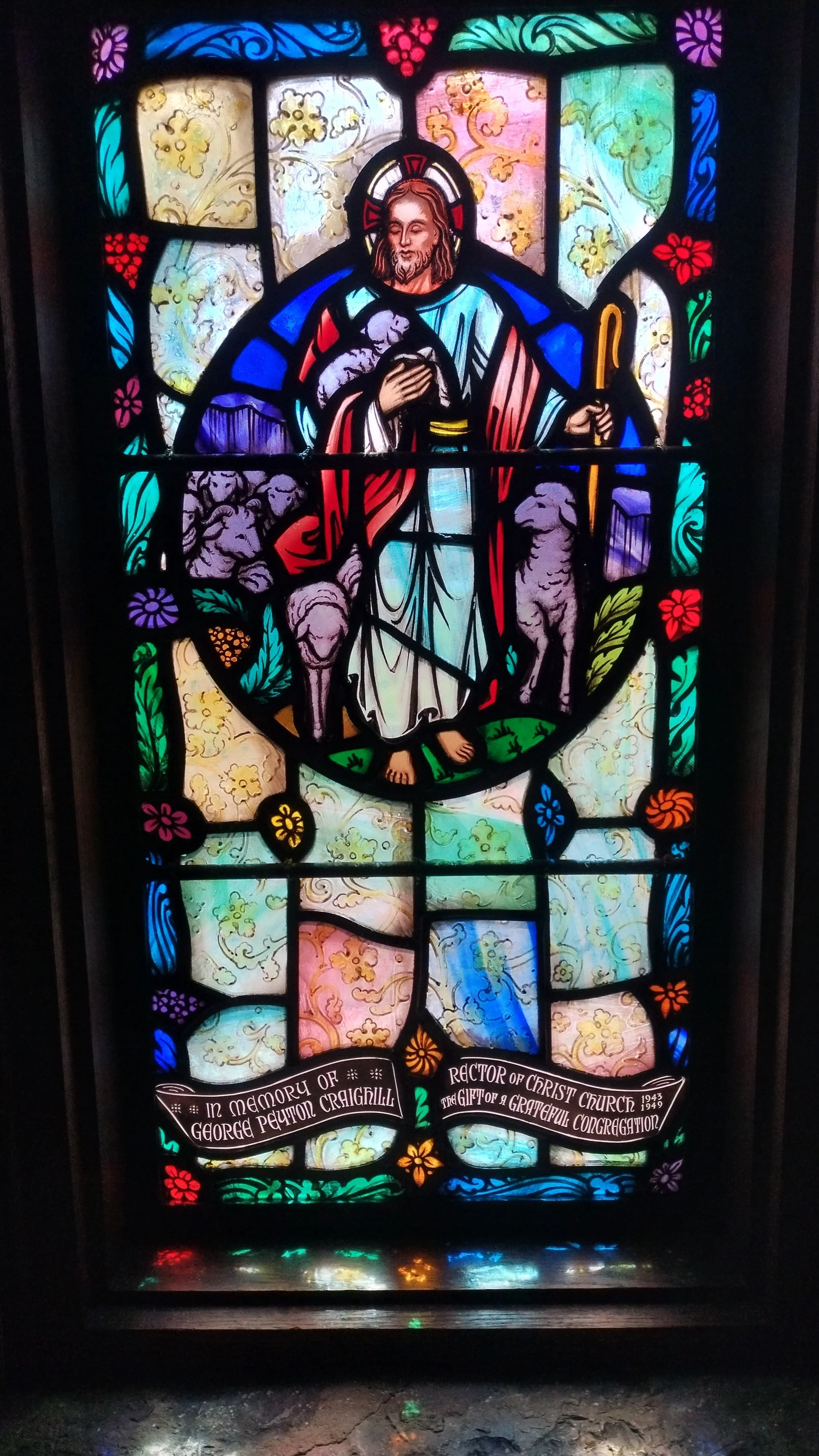
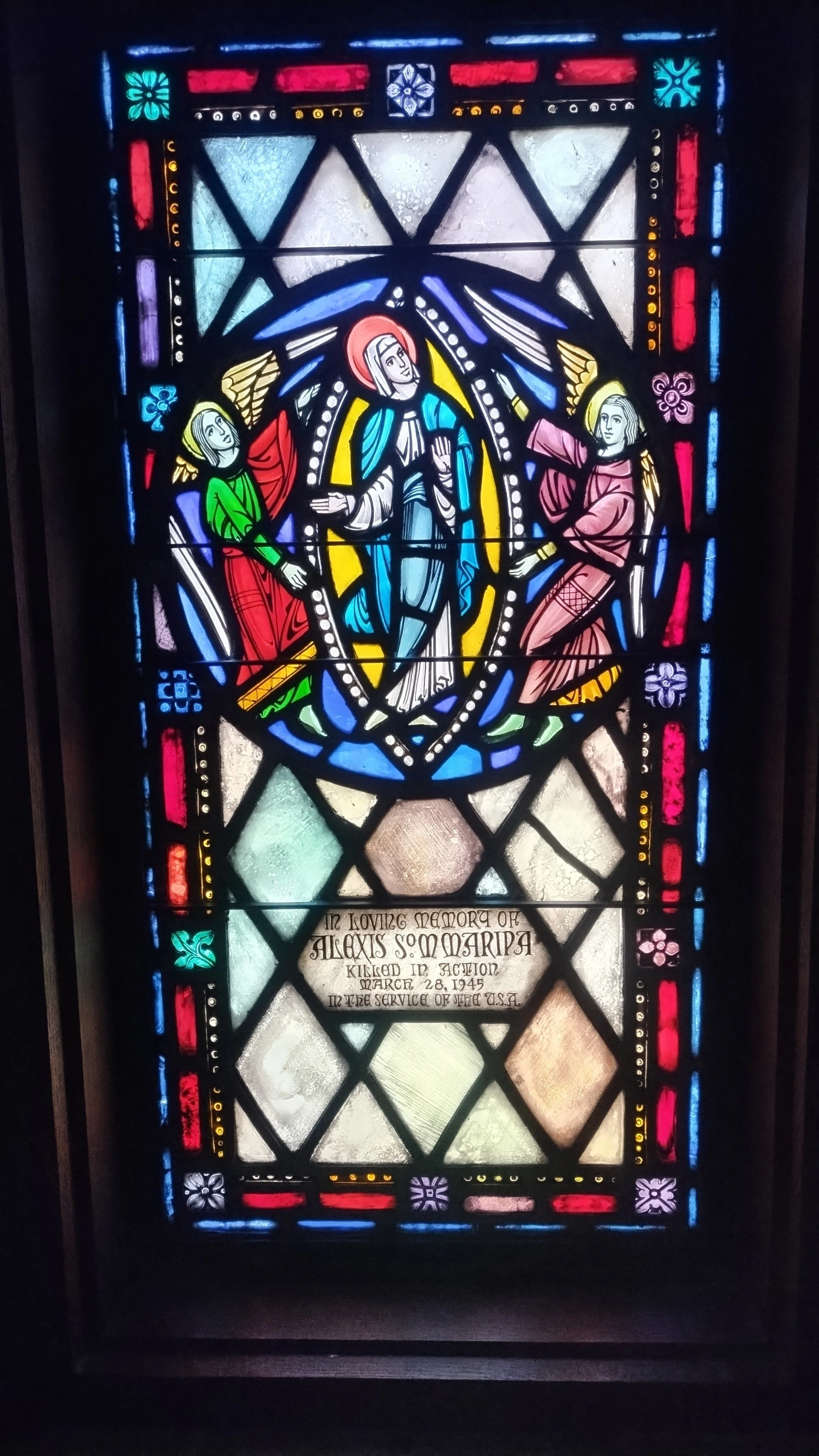
There are three small windows in the narthex. To the right in the narthex, in memory of Sally Page Nelson, is a charming vignette of Jesus as a small child sitting in his mother’s lap as they read a book. In the narthex to the left, in memory of George Peyton Craighill, Rector 1943 -1949, is a scene of Jesus as the Good Shepherd. On the left side wall, in memory of Alexis Sommaripa, is the Assumption of the Virgin Mary, with an angel on either side lifting her to heaven.
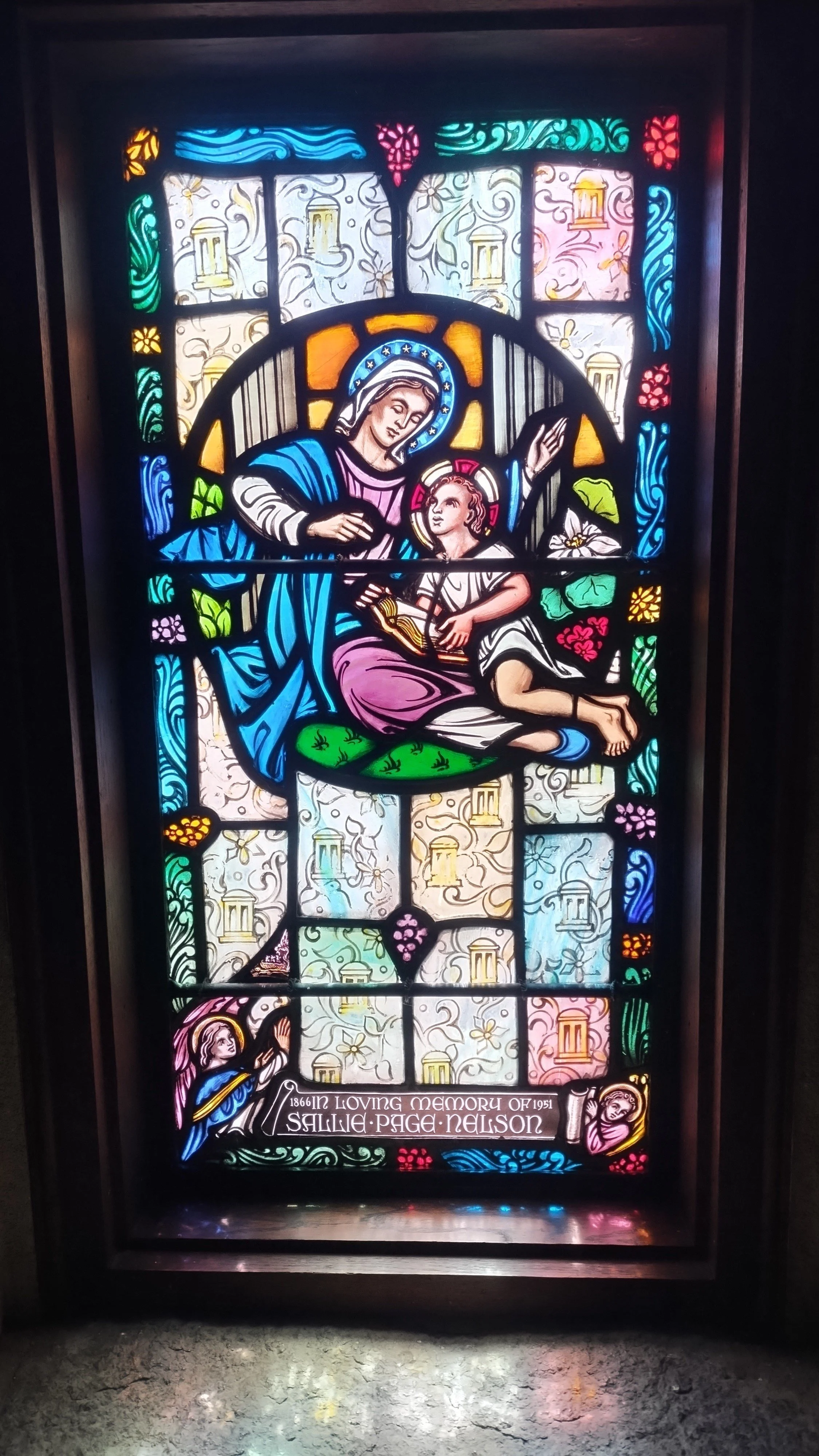
Photo by Wayne McNair
Photo by Wayne McNair
Photo by Wayne McNair
Photos by Roy Mullins
Photo by Roy Mullins
As one enters the sanctuary, the first window on the right is in memory of Maria Frazer Dougherty. It is more modern in execution than the others. The main motif is a large red cross to commemorate the work Mrs. Dougherty did for the Red Cross Association. The rest of the window has intertwined symbols of the good works and interests of her life, including farming, country life, music, and the church. This is an interesting window, especially for those who remember Mrs. Dougherty.
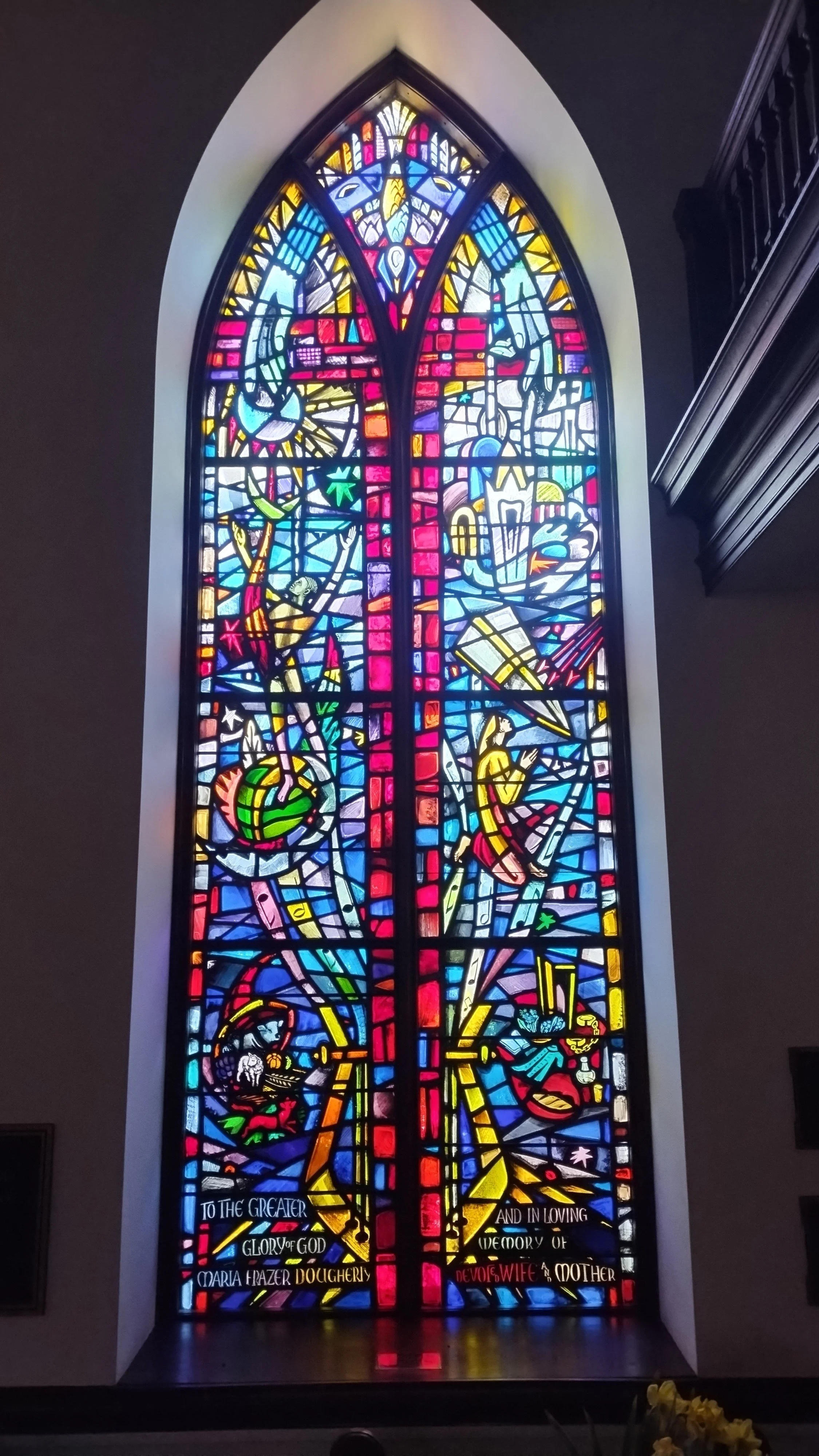
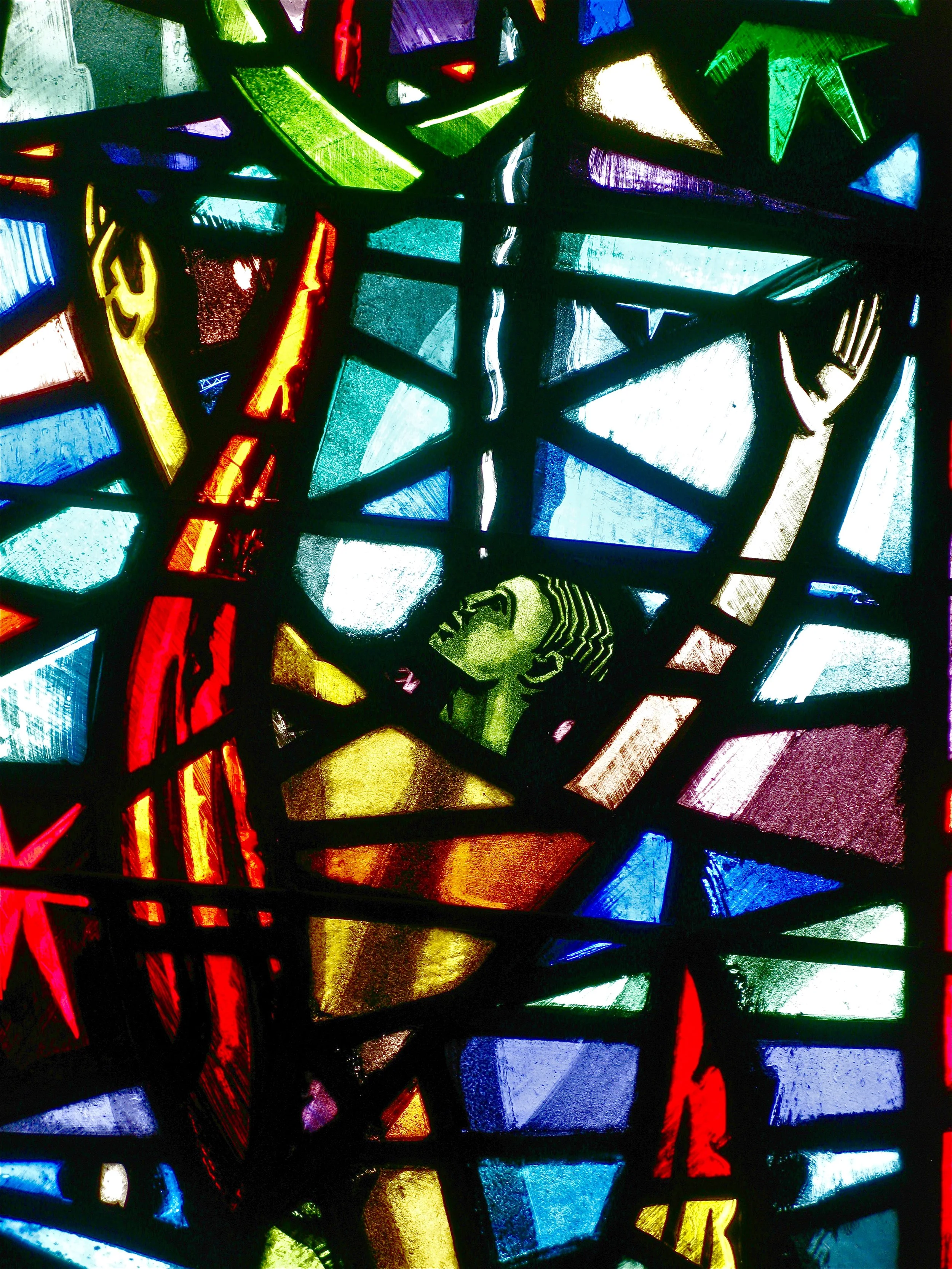
Photo by Wayne McNair
The next window is in memory of the Burwells of Carter Hall. The main scenes here are from Luke 24. There is a blazon saying “Dine with us for it is toward evening.” On the third day after the crucifixion, Cleopas and another disciple were on the road to Emmaus where they are joined by the resurrected Christ whom they do not recognize. They tell him of the news of the crucifixion, and when evening comes they invite him to eat with them, whereupon, as he breaks bread, he reveals himself to them. On the left we see them walking with Christ unrecognized, without a halo, but showing stigmata; and on the right we see him breaking bread for them, now with a halo and without stigmata. On the rest of the window there are charming small cartouches of animals and farming activities.
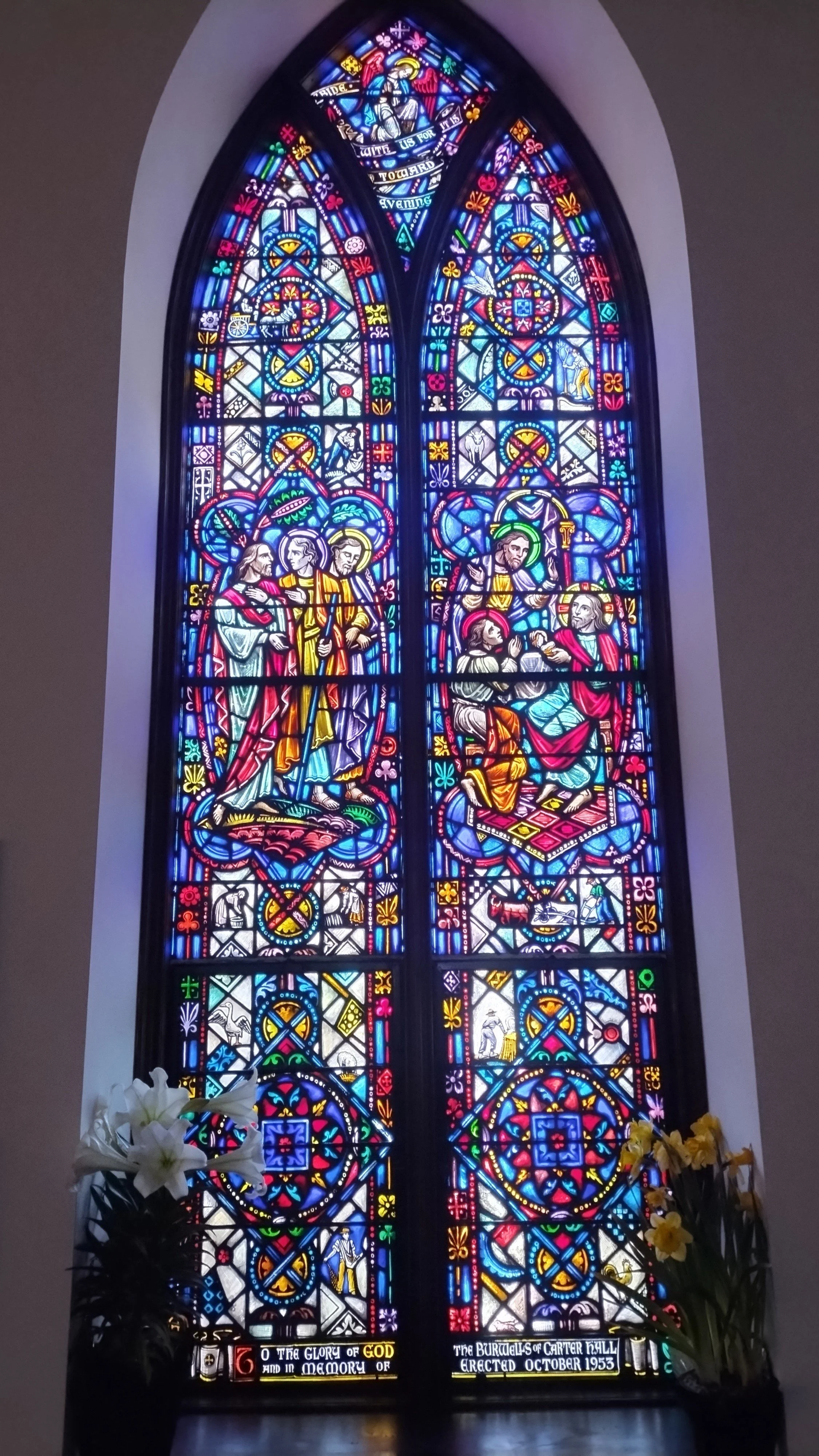
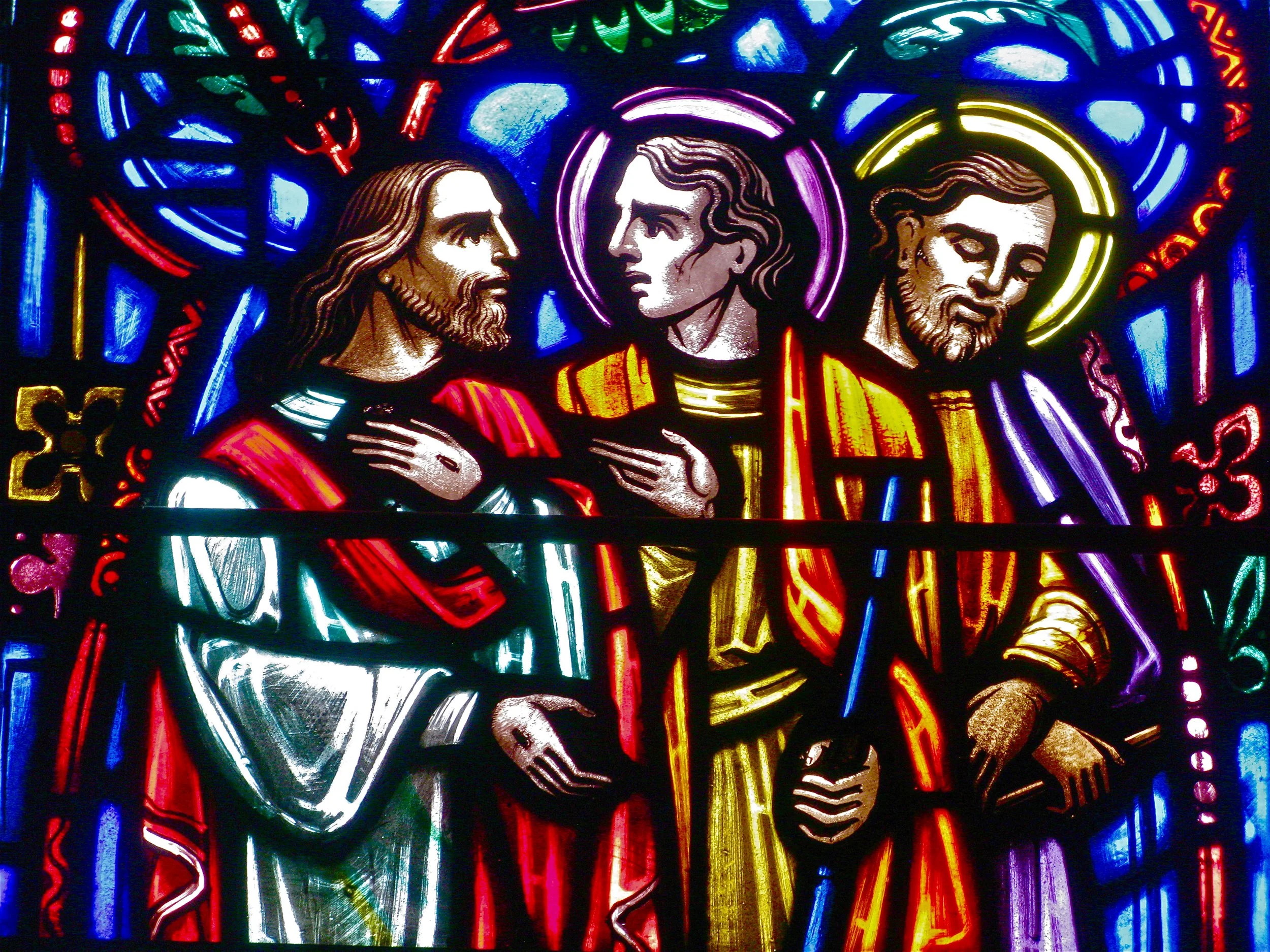
Photo by Roy Mullins
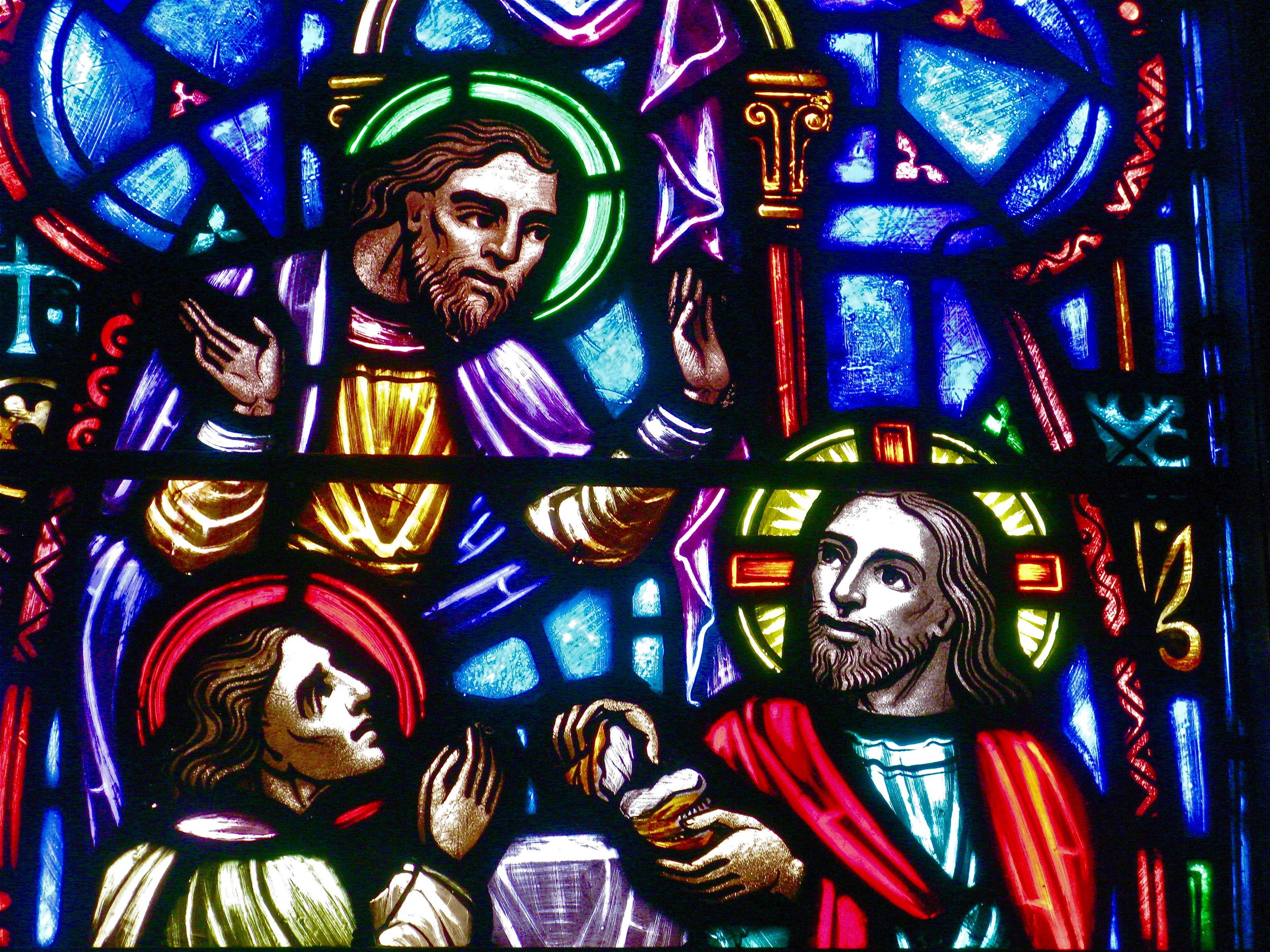
Photo by Wayne McNair
Next come the Gilpin window, which presumably was made by the same artists, and around the same time as the previous window. The main figures are Ruth, the Moabitess, and her mother-in-law Naomi. Below these are smaller scenes: Ruth Gleaning in the field and, on the right, her marriage to Boaz.
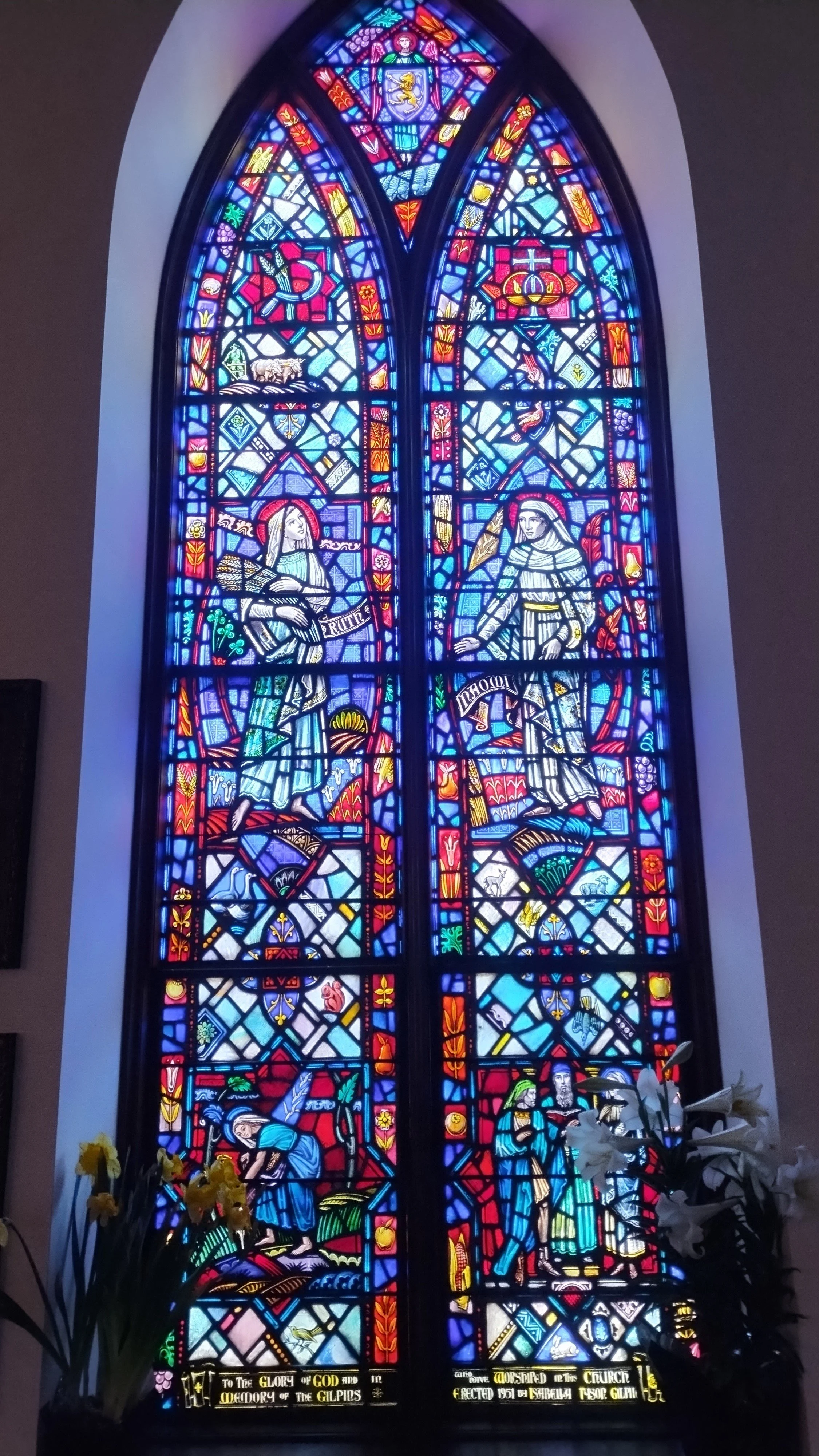
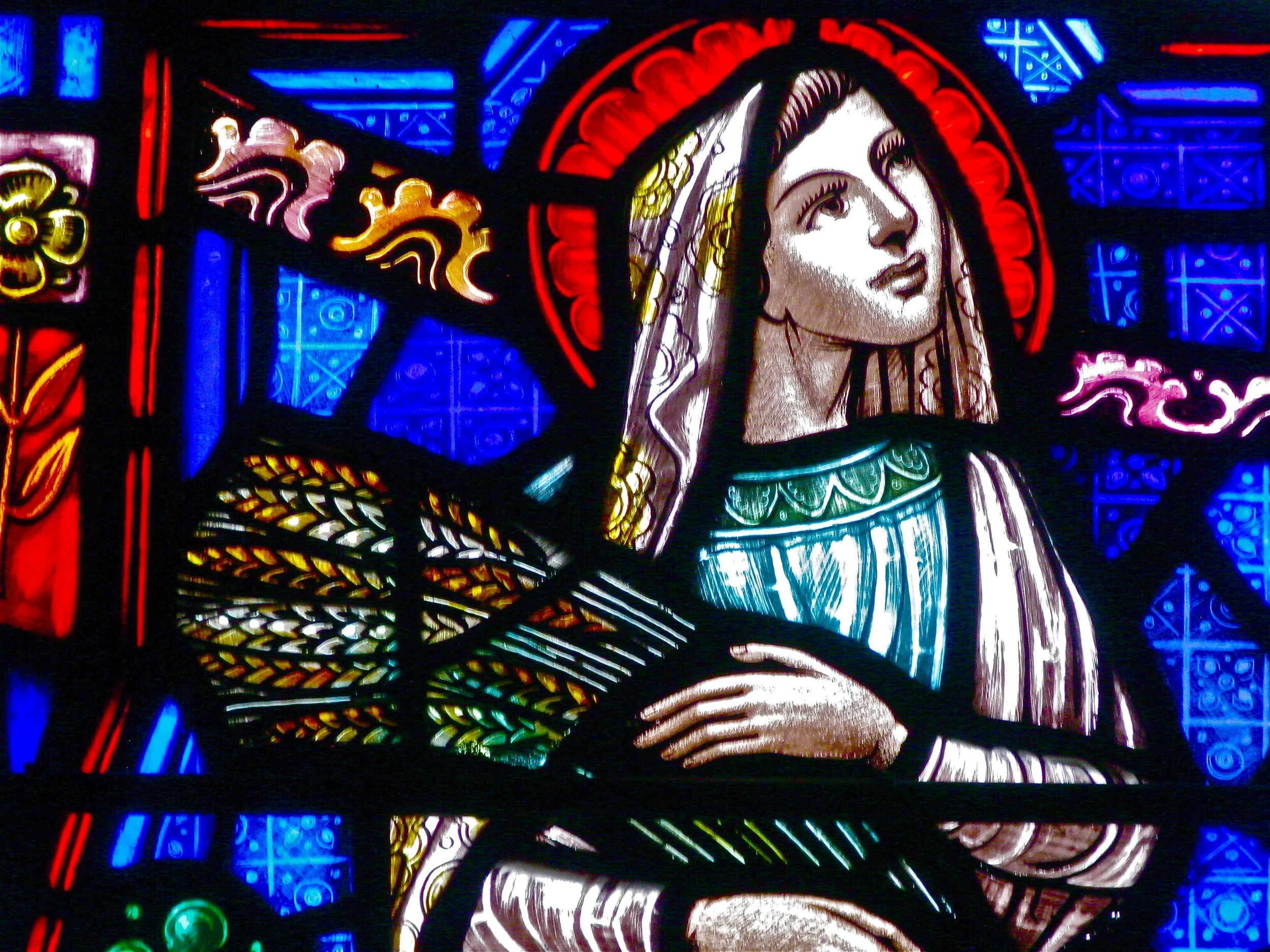
Photo by Wayne McNair
Over the Baptismal Font is the Thomas Wilson Carter II window, which has to do with water. On the upper left is the pool of Bethesda. The lame man with his crutch is reclining beside the pool as Jesus performs the miracle of healing him. On the upper right we see Jesus changing water into wine at the wedding feast of Cana. On the lower left is the Samaritan woman at the well, with whom Jesus spoke and who recognized him as the Messiah. On the lower left is the Baptism of Christ by John the Baptist.
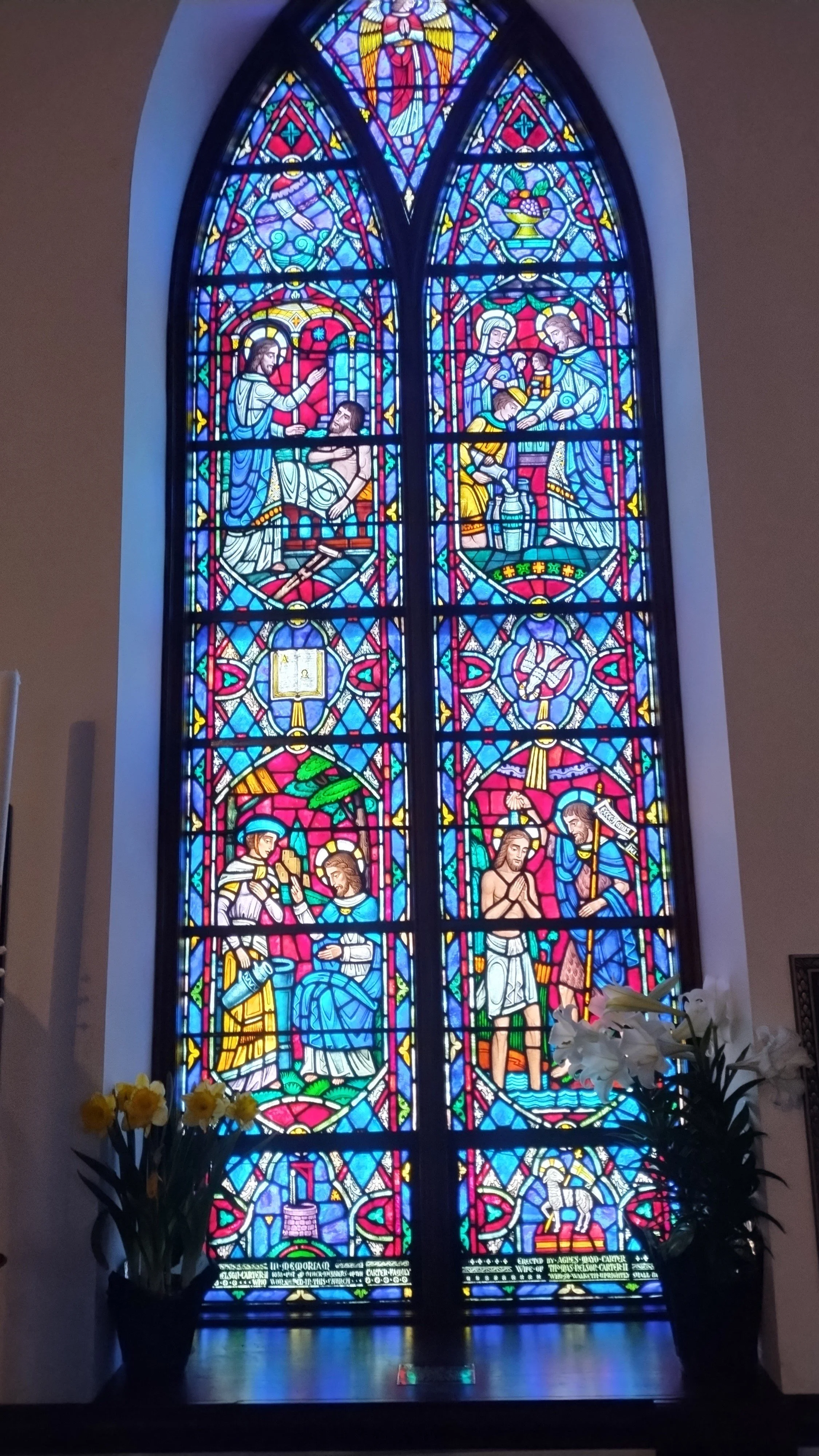
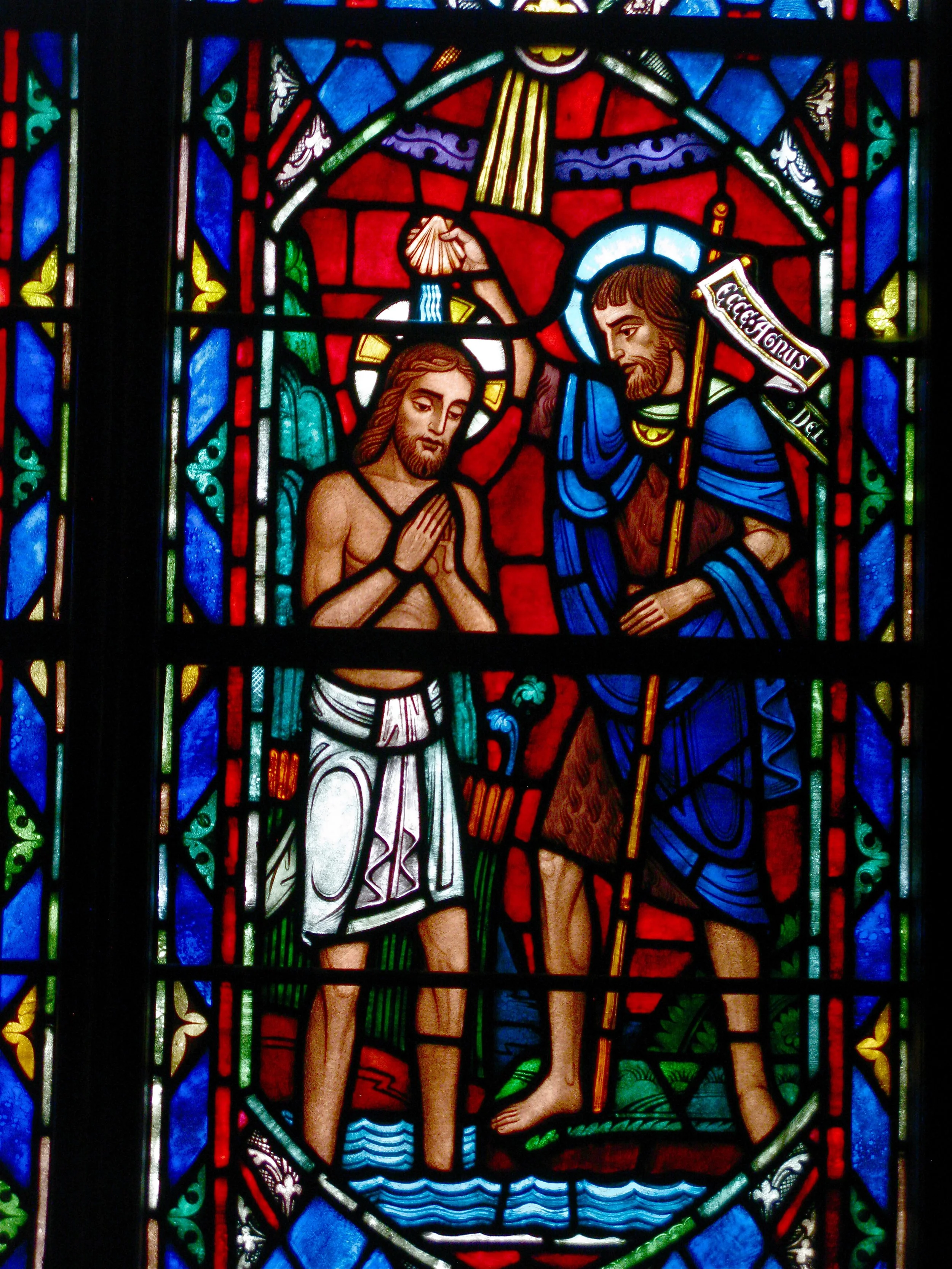
Photo by Wayne McNair
Above the altar is Jesus as a boy discoursing with the elders at the age of twelve in the temple of Jerusalem. “And all that heard him were astonished at his understanding and answers.” (Luke 2:47)
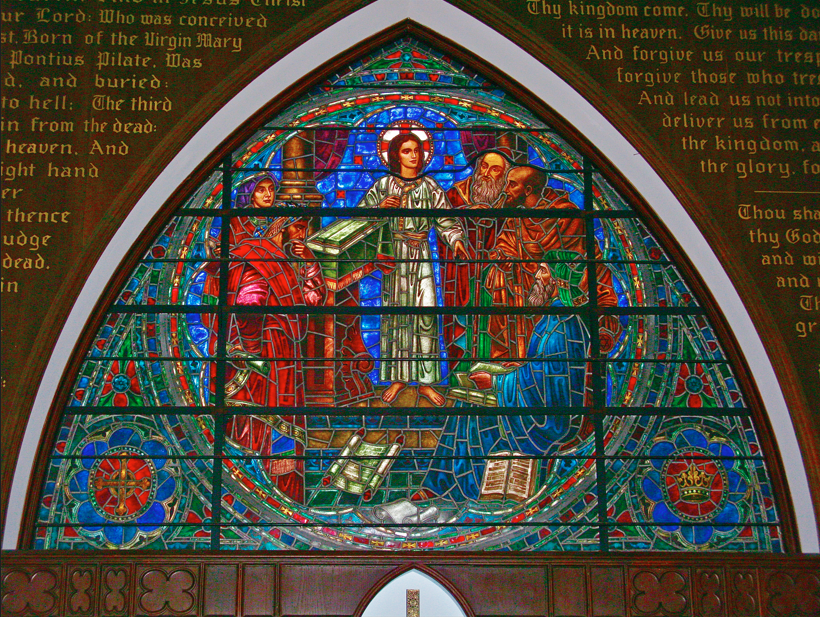
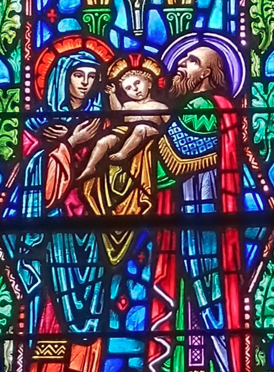
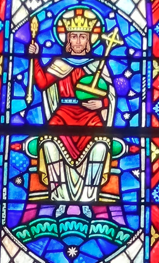
Photo by Wayne McNair
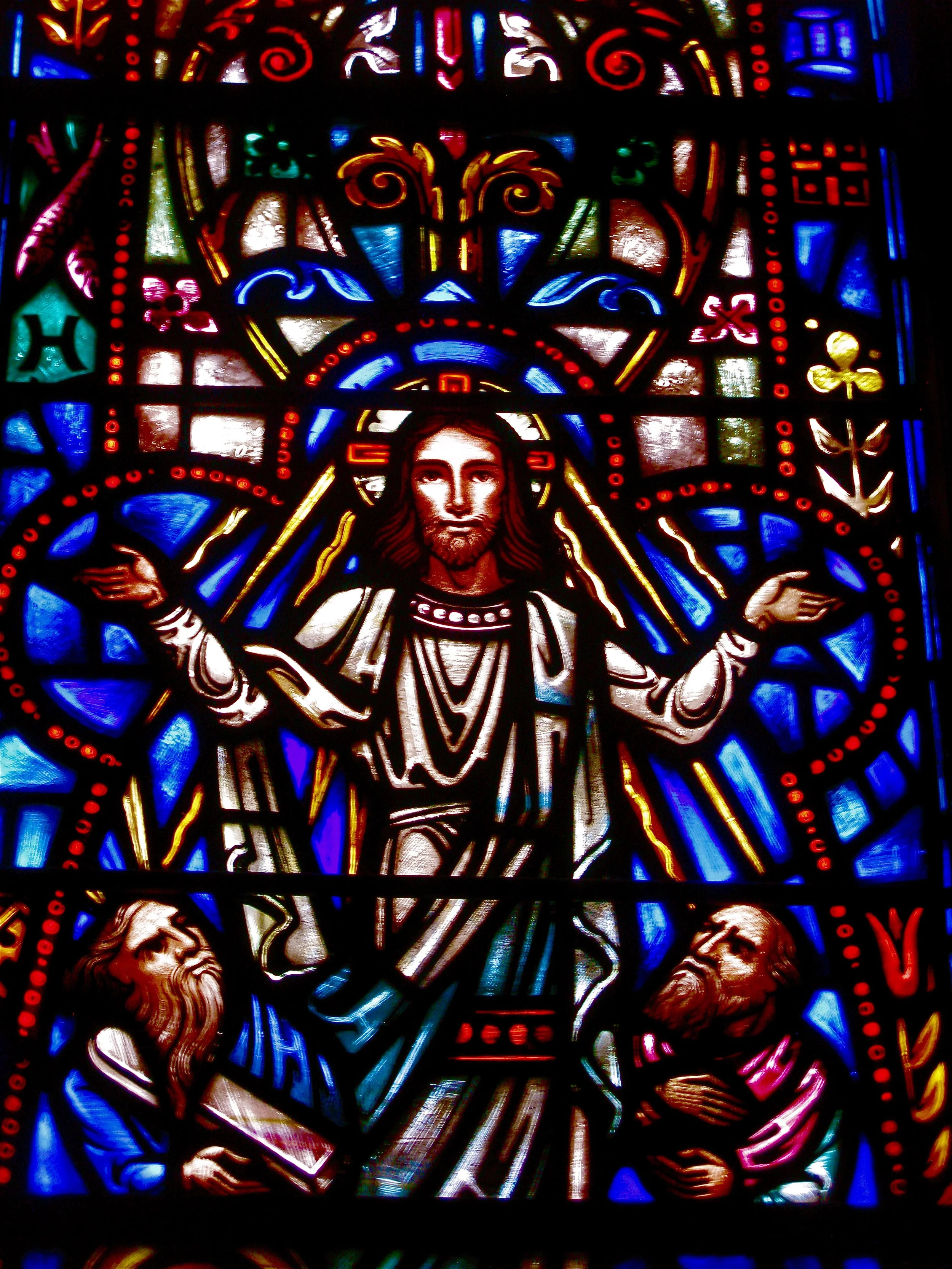
Photo by Wayne McNair
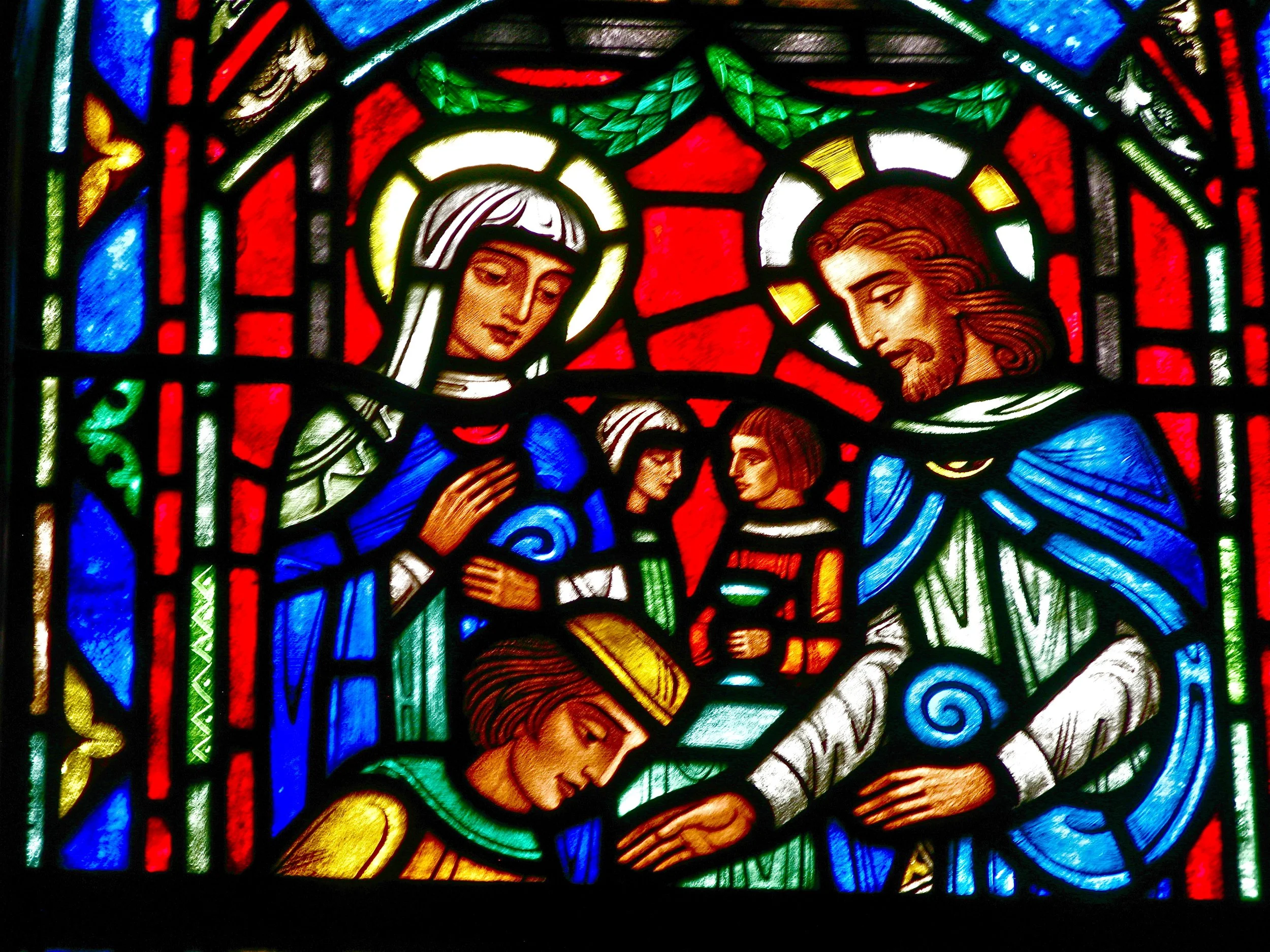
Photo by Wayne McNair
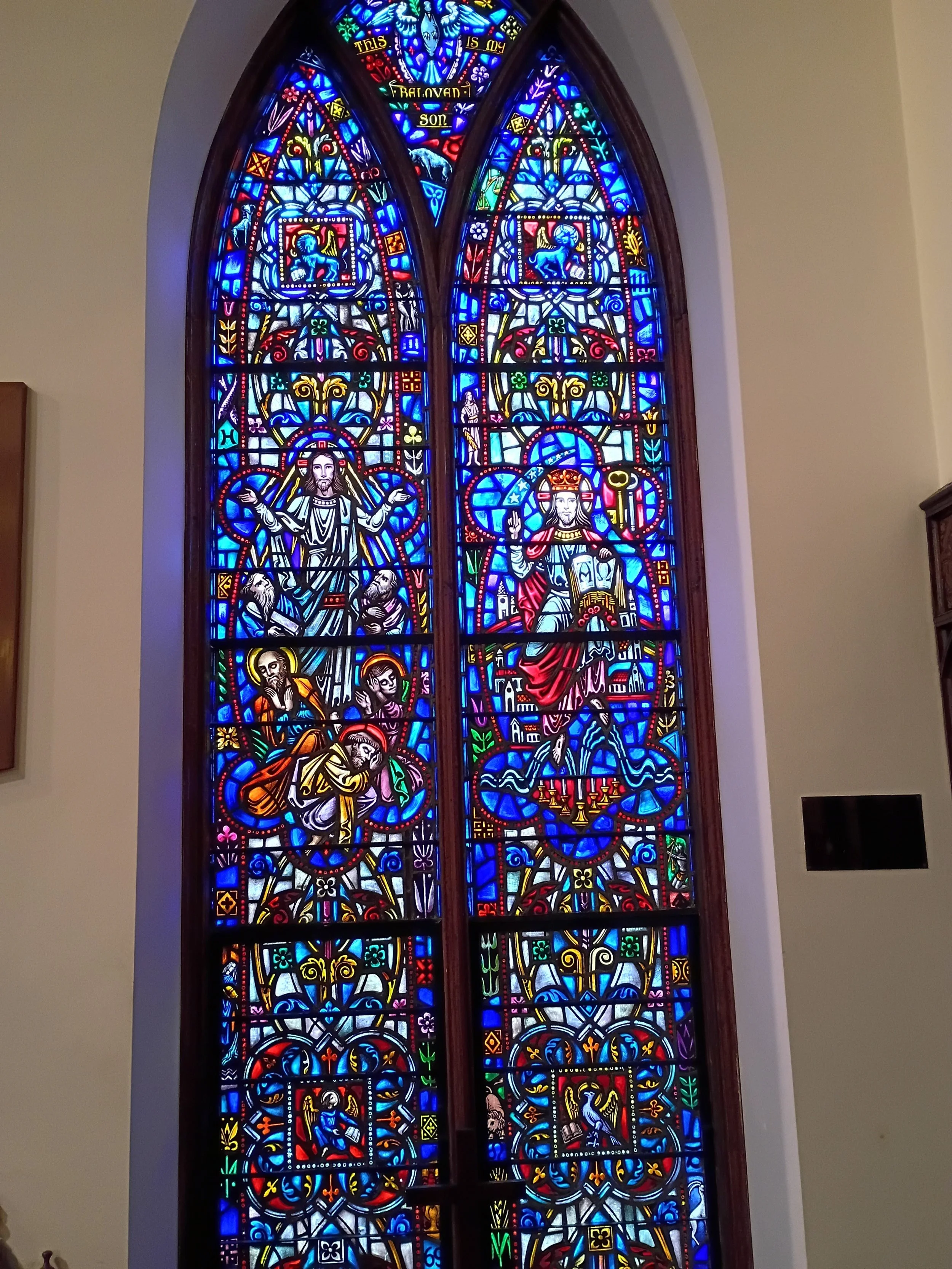
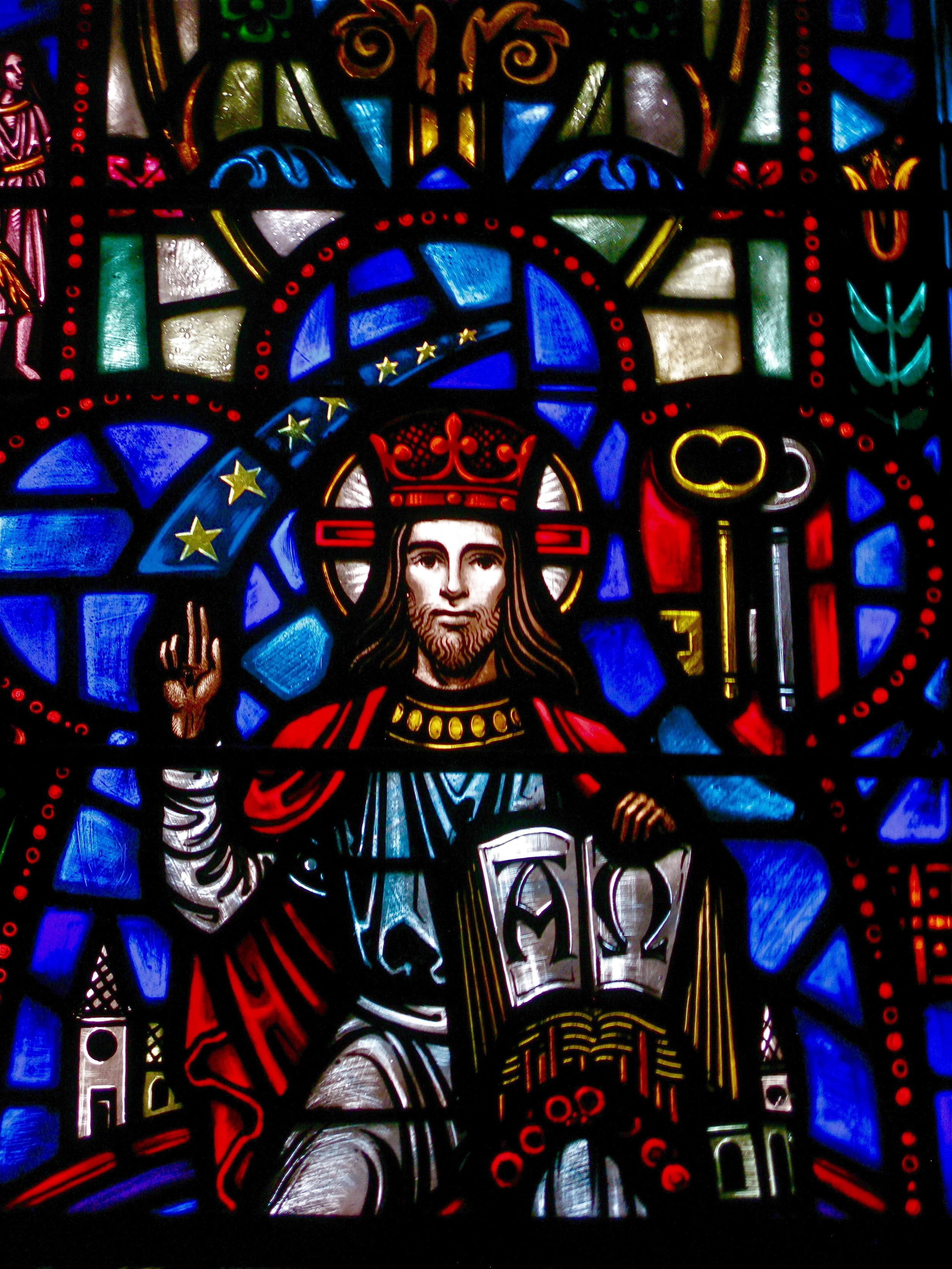
To the left is the window with the signs and symbols of the Zodiac around the border. Unfortunately these cartouches are obscured by the protective coverings which were installed several years ago. In the main panel on the right is Christ Enthroned, with many symbols from the Revelation of John: the keys, the city, the fountain, and the candlesticks. On the left side is Christ in the Garden of Gethsemane, surrounded by the sleeping apostles.
Over the organ, most appropriately, is St. Cecelia with the organ which she is supposed to have invented, accompanied by a harp-playing angel on the top. This window, dedicated to Edward and Emily Butler, also depicts St. Francis with attendant birds and animals on the left panel.
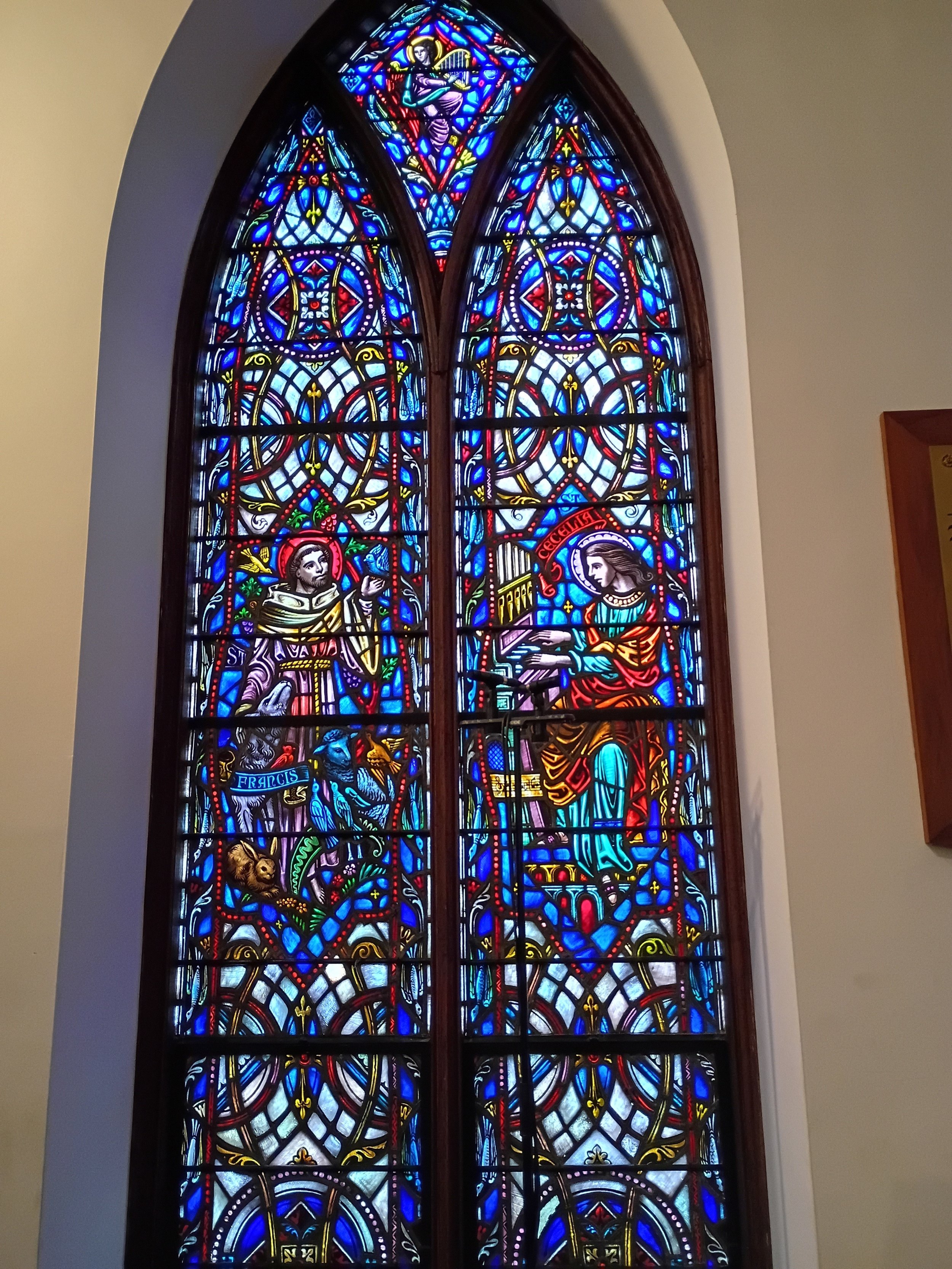
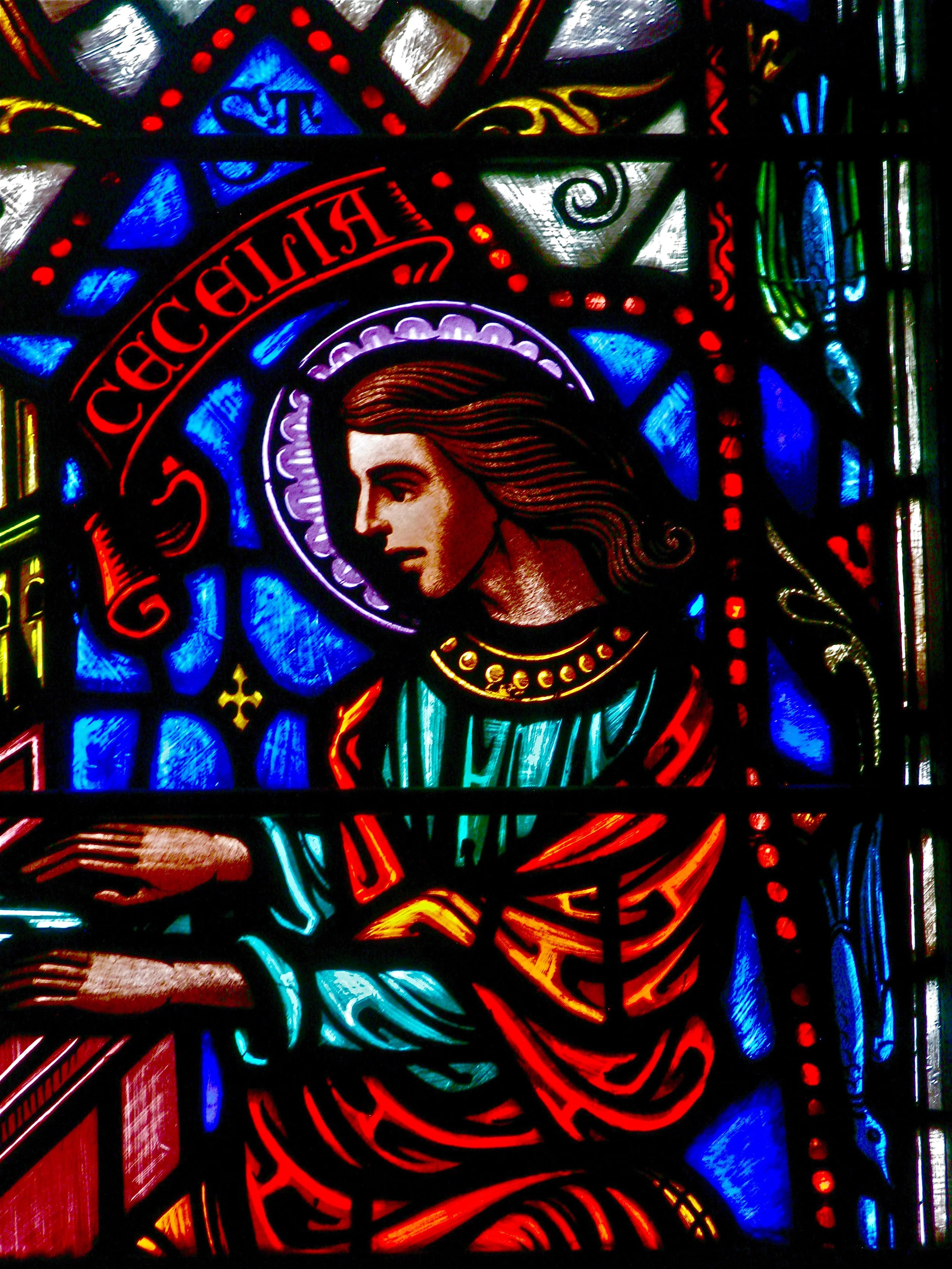
Photo by Wayne McNair
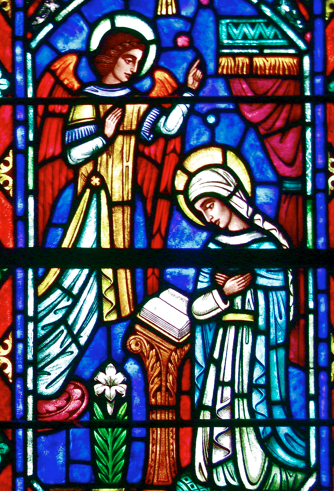
Moving back to the nave, the Mayo window to the left of the organ depicts four scenes of the birth of Jesus. The scenes are the Nativity, Jesus and Joseph at carpentry, the flight into Egypt, and the Annunciation. The small cartouches above the scenes. a star, carpentry tools, sphinx, pyramids, and a dove are not placed over the appropriate vignettes. Many think this is a deliberate mistake which is traditionally built into all churches and synagogues to avoid the presumption of perfection.
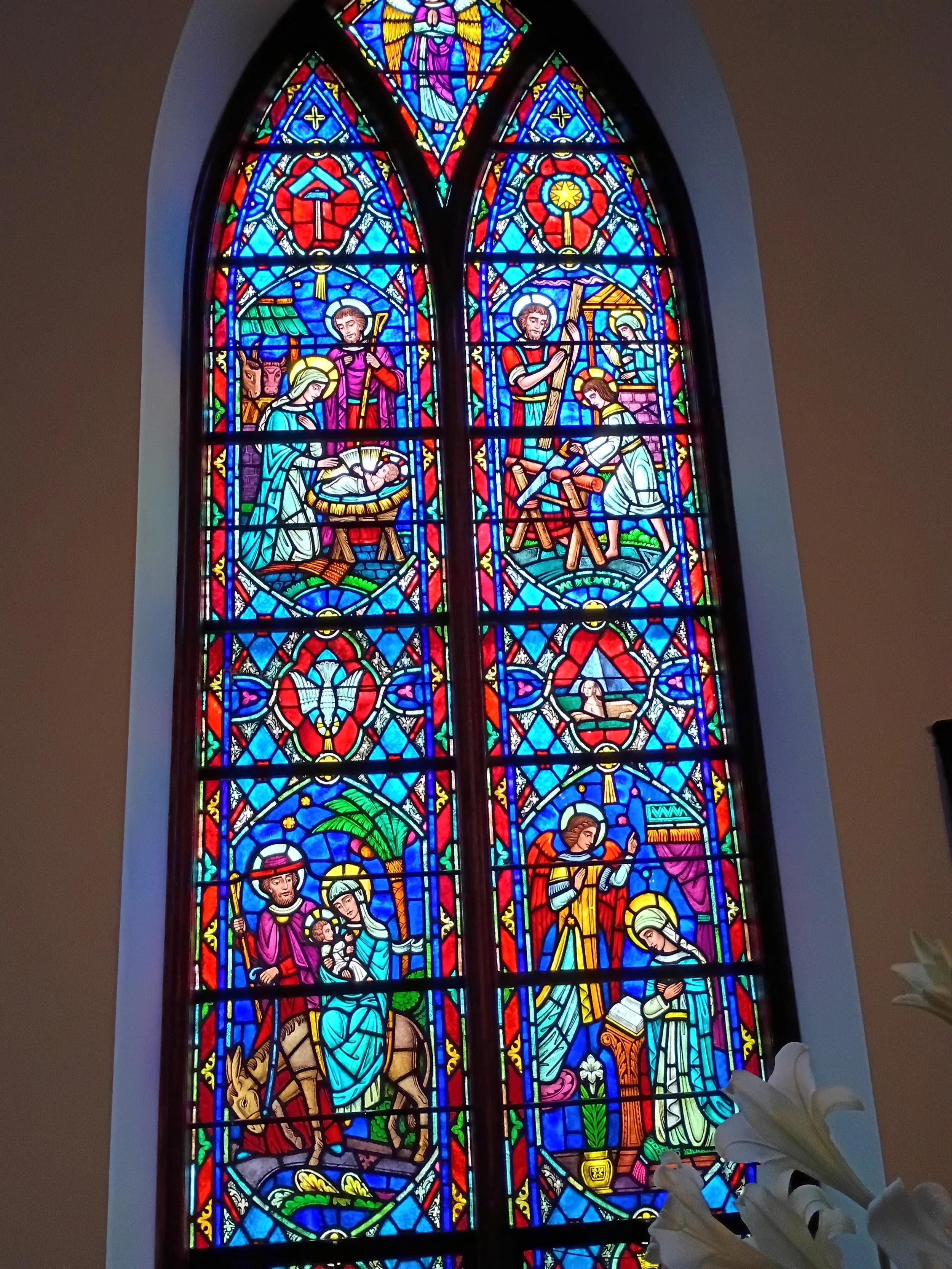
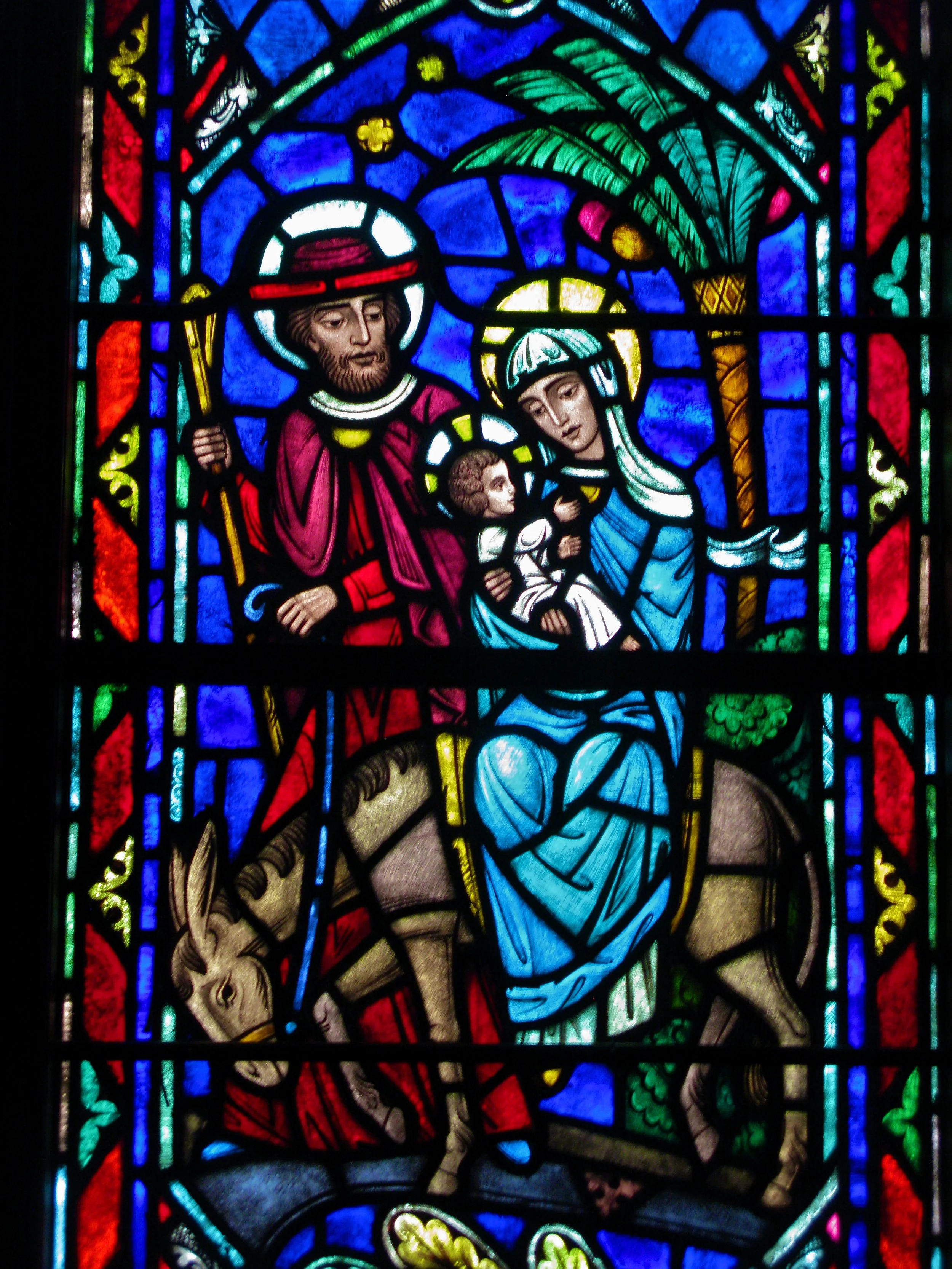
Next, on the Randolph window, the inscription reads, “I am the resurrection and the life” (John 11:25). On the upper left we see Jesus stepping out of the tomb surrounded by flames. On the left we see him ascending. On the lower left Jonah is stepping out of the mouth of the whale, and on the right is Elijah ascending in his fiery chariot, flinging his mantle down to Elisha.
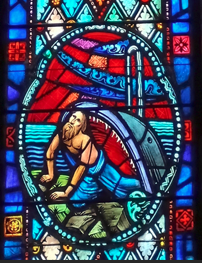
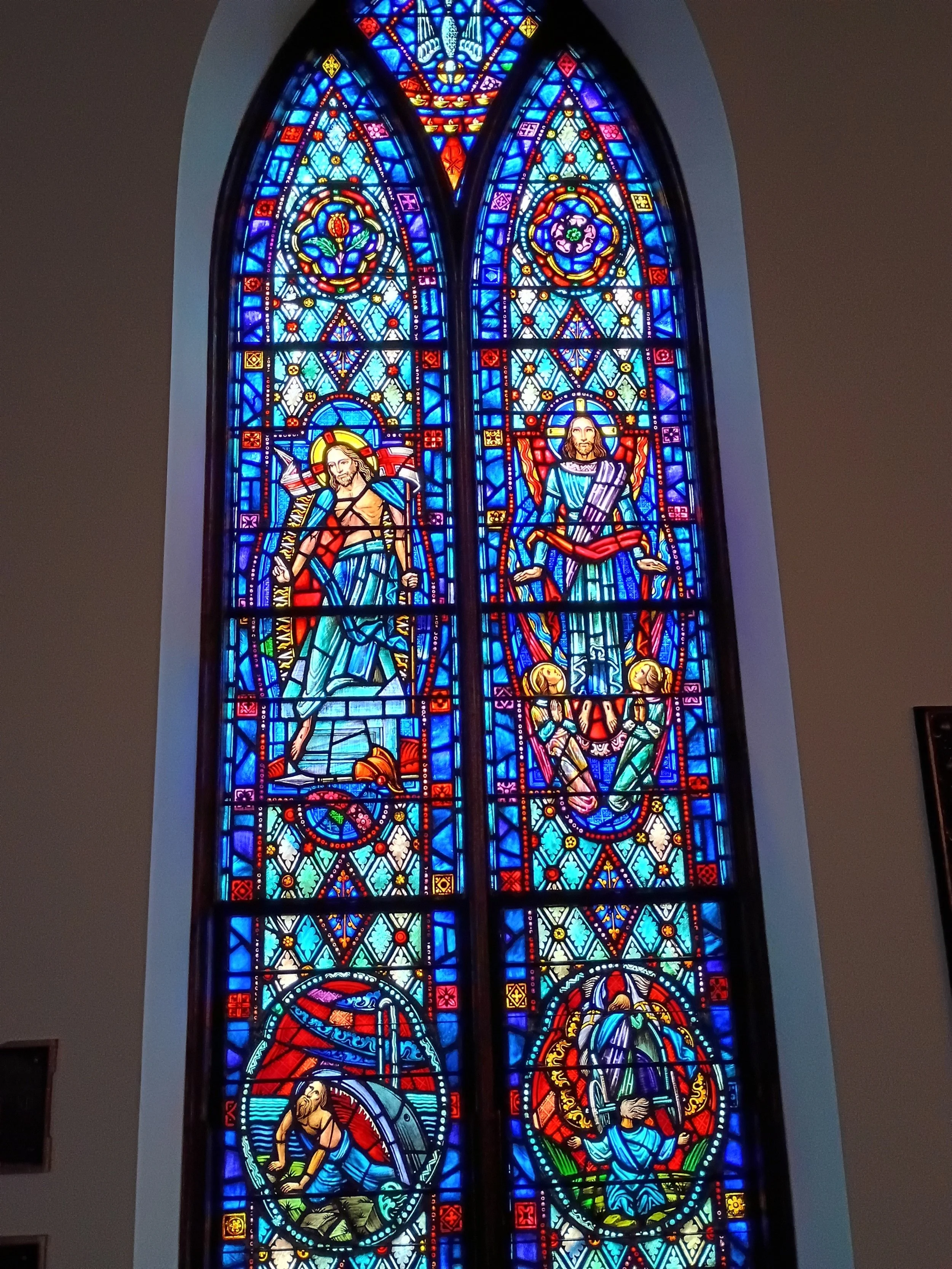
Photo by Wayne McNair
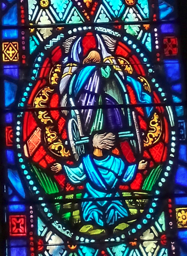
Photo by Wayne McNair
Next, in the Burwell and Page window, Mary presents the infant Jesus at the temple with an offering of two turtledoves. The old and devout St. Simeon, who had been promised by the Holy Spirit that he would see the Messiah before he died, recognizes the child and takes him in his arms, praising God with the words which we know as the Nunc Dimittis, a line of which is on the window (Luke 2:32). On the right panel is a quotation from Malachi (4:2) who has blasted a diatribe against the Israelites, decrying their lack of observance of God’s law, thus the accoutrements of Judaism are shown in disarray in the window. God’s promise to send the prophet Elijah to reconcile mankind before Judgement was taken as a messianic prophecy, indicated by a tiny glowing infant in swaddling clothes appearing in the upper corner.
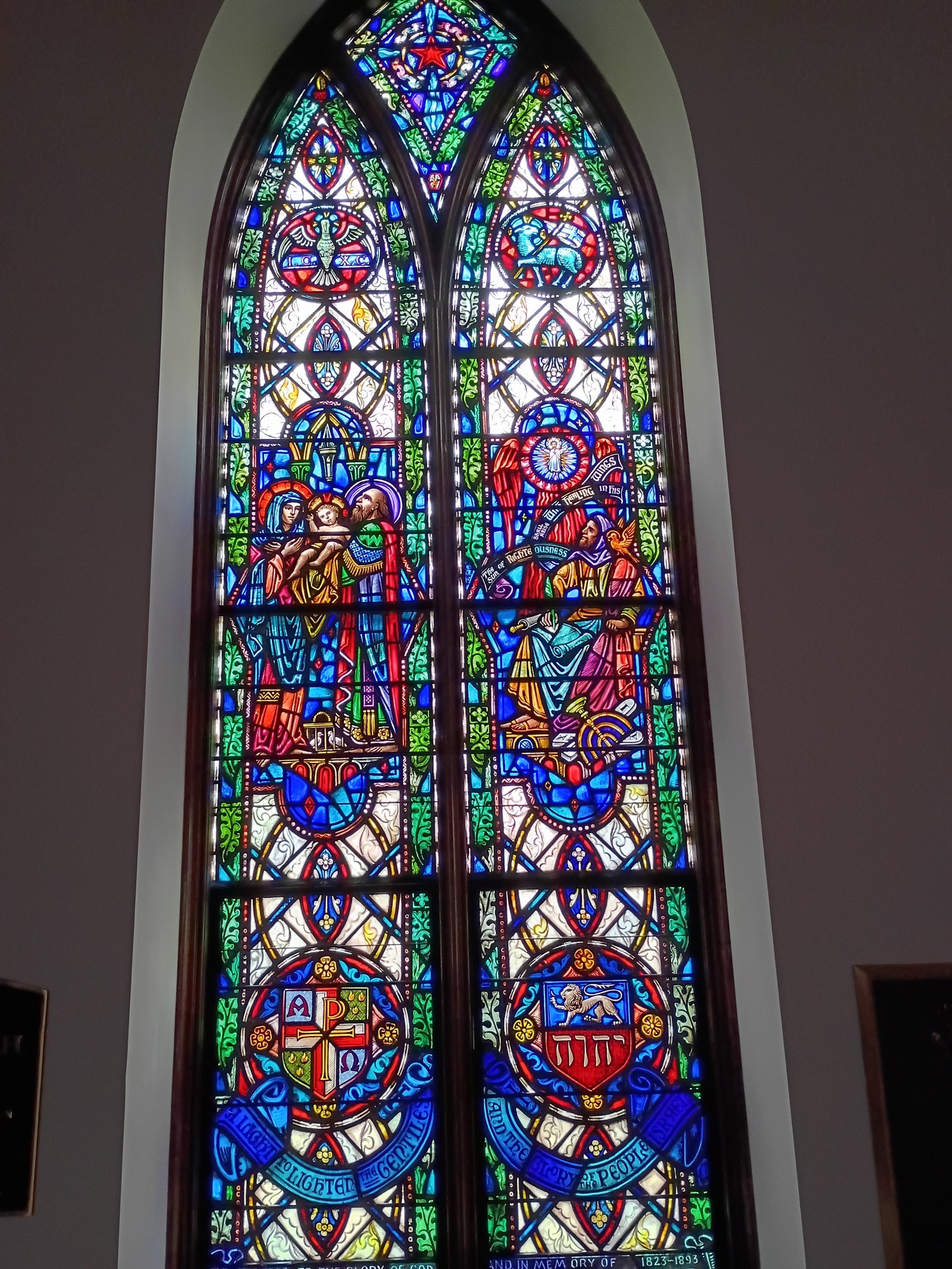
Photo by Wayne McNair
Photo by Roy Mullins
On the last window we see a quartet of saints with their attributes. On the left, St. Agnes with her lamb, and St. Paul with his sword. On the other panel is St. Elizabeth of Hungary with her cloak full of red roses, next to Moses with his stone tablets of the Ten Commandments. I must say that I have long puzzled over the combination of these four - two rather charming lady saints, accompanying “the big guns,” Paul and Moses. The clue lies in the dedication, in memory of Agnes Mayo Carter. We can only suppose that there was also an Elizabeth prominent in the family and even possibly a Paul or Moses? In all these windows there are abundant signs and symbols worthy of study but they are, as the old cliche has it: “too numerous to mention.”
Photo by Wayne McNair
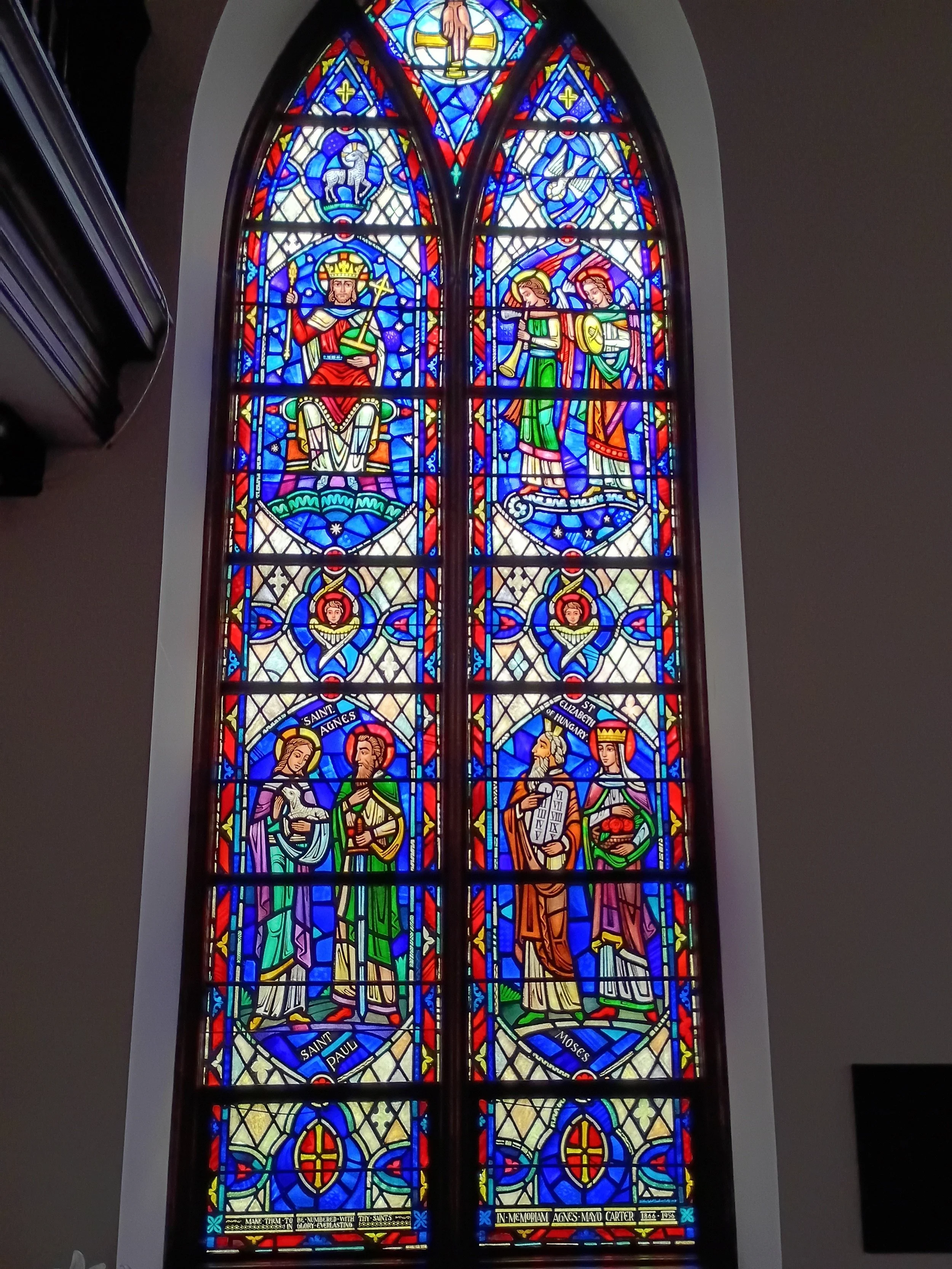
Photo by Roy Mullins
Photo by Wayne McNair
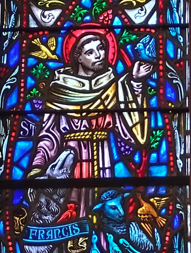
Photo by Wayne McNair
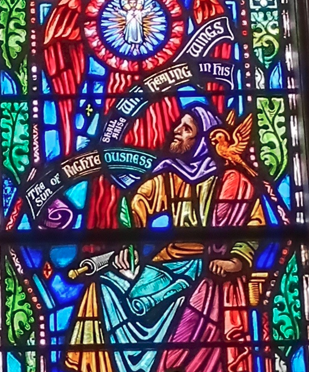
Photo by Wayne McNair
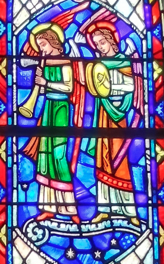
Photo by Wayne McNair
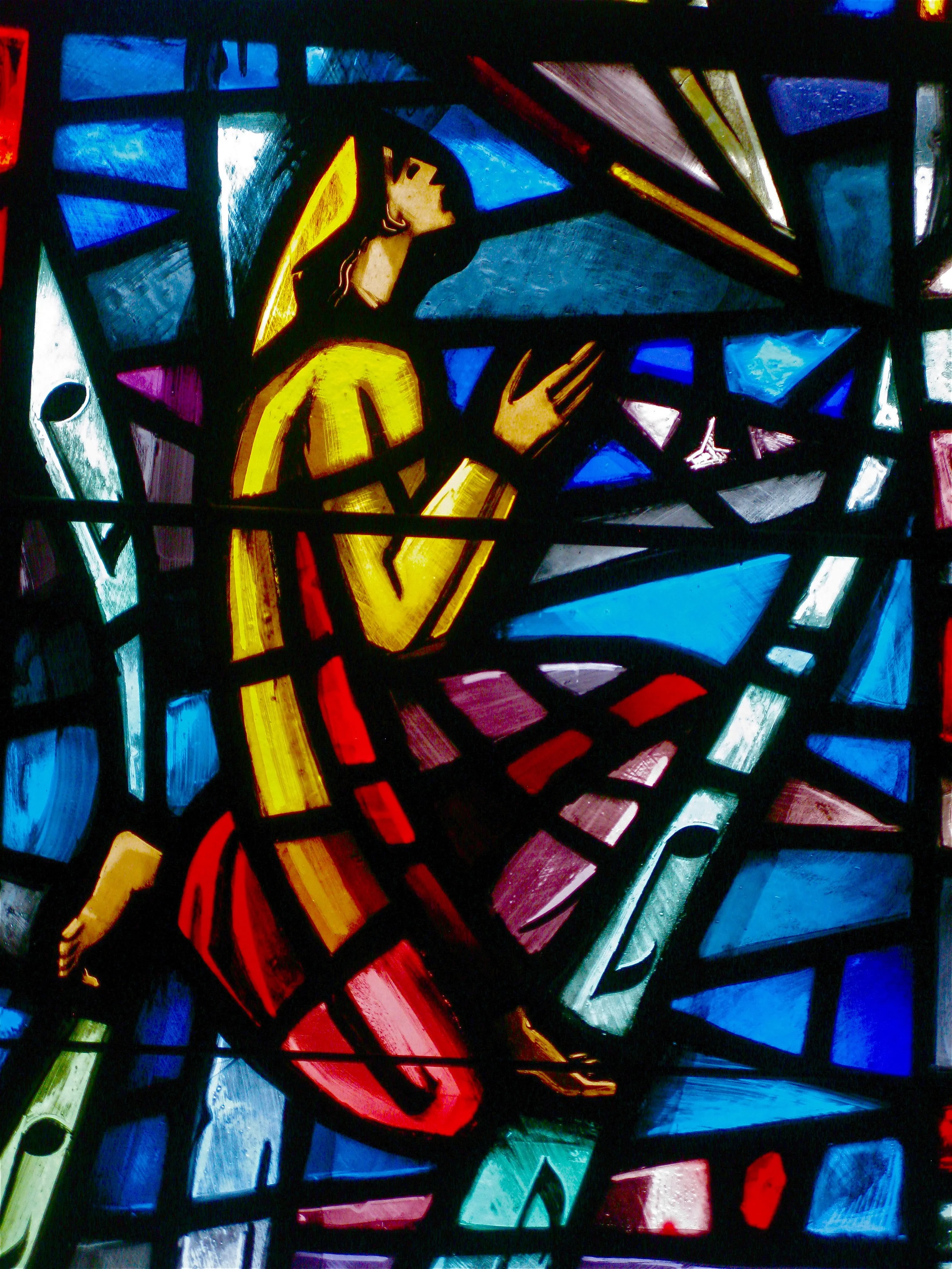
Photo by Wayne McNair
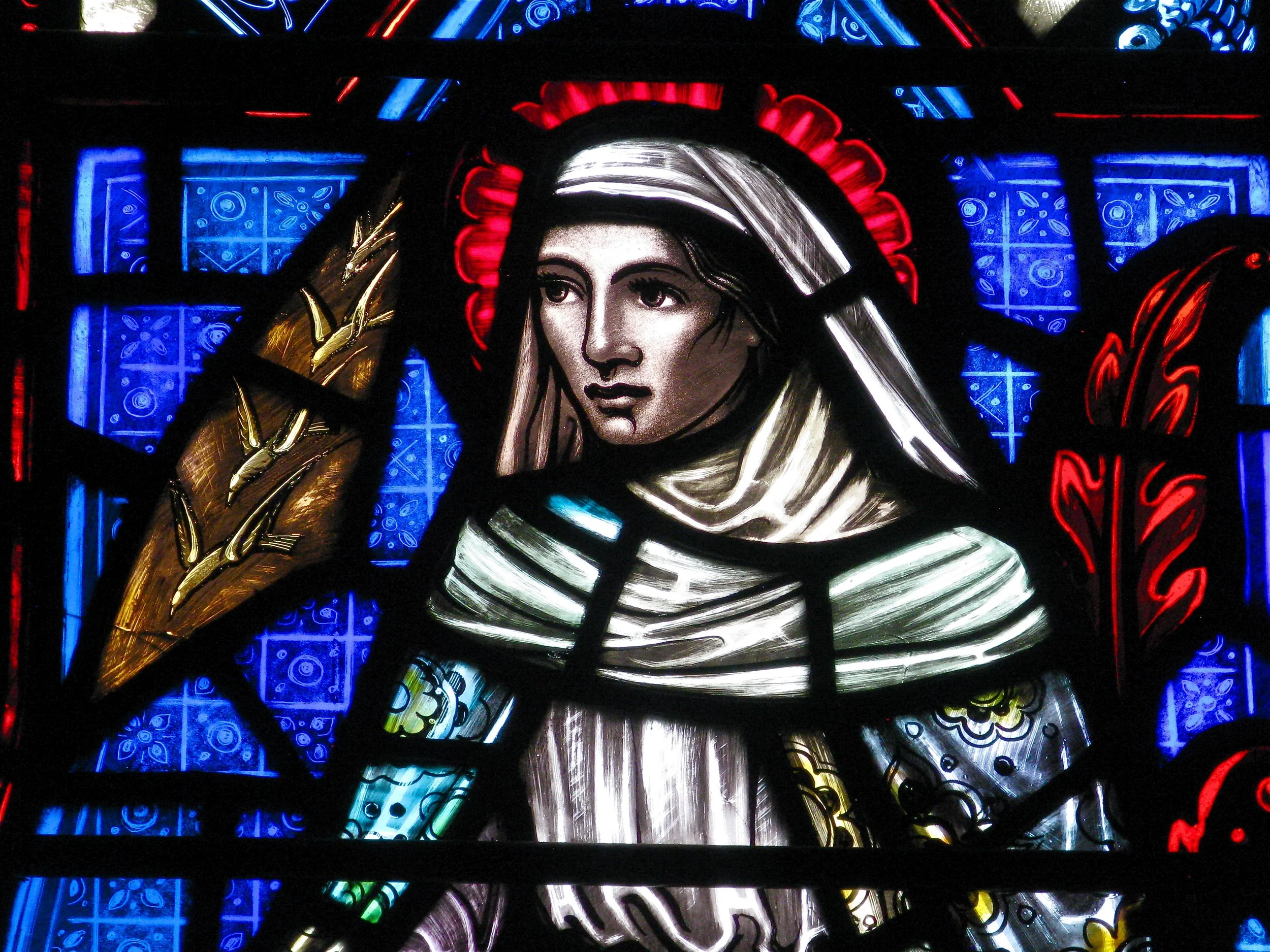
Photo by Wayne McNair
Photo by Roy Mullins
Photo by Roy Mullins
Photo by Roy Mullins
Photo by Roy Mullins
Photo by Roy Mullins
Photo by Roy Mullins